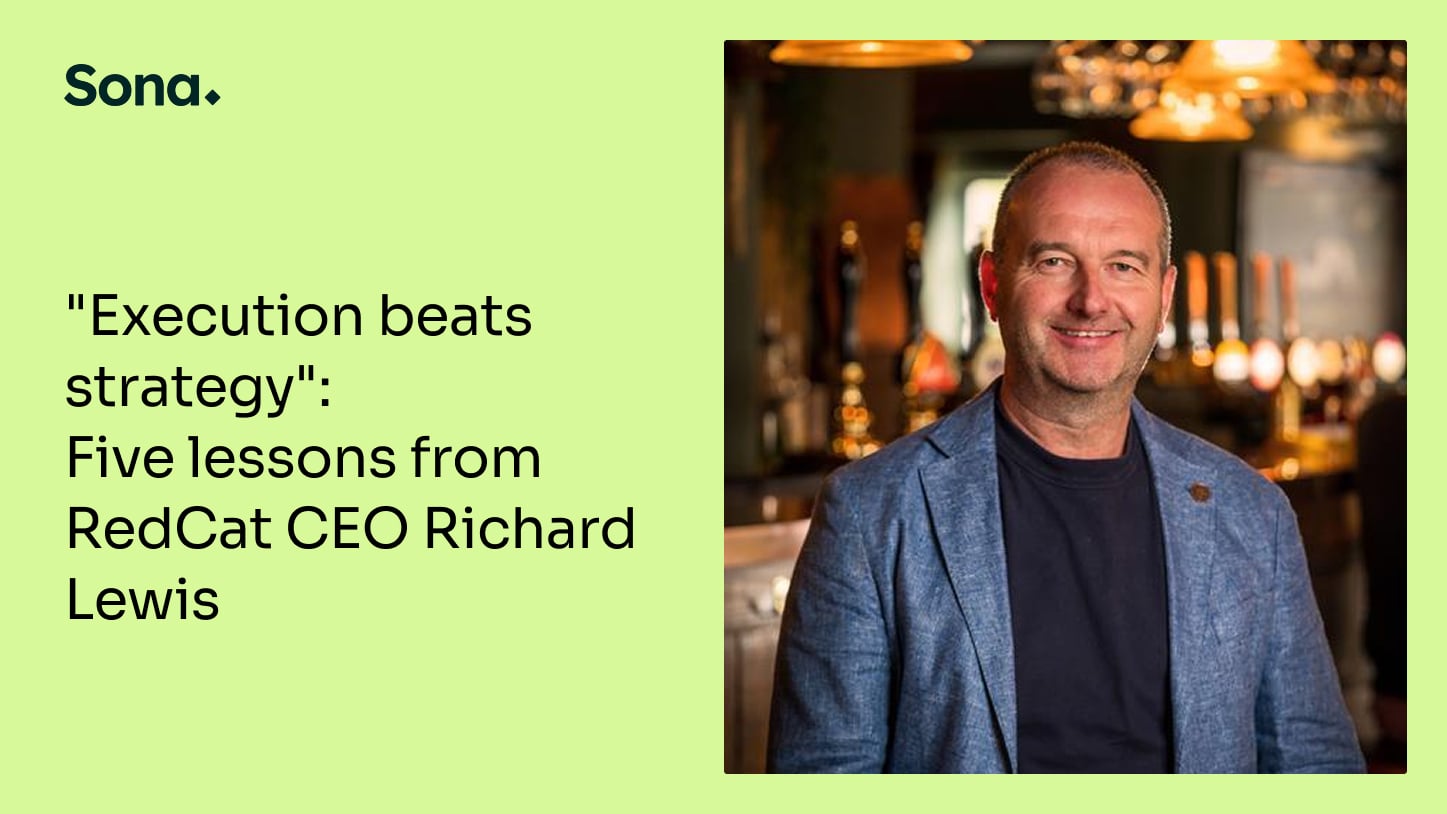
Sona's Jonny Ballance sat down with Richard Lewis, Group Chief Executive of RedCat Independent Pubs, at the Excellence in Pub & Bar Retailing Conference for a fireside chat on people, performance, and what separates operators who thrive from those who just survive.
Richard has led businesses of 40,000 employees and businesses of a few hundred. Before hospitality, he spent years in retail: Woolworths, Sainsbury's, and seven years in New Zealand. That breadth gave him a rare vantage point. What followed was one of the more honest conversations you'll hear at a conference.
Here's what stuck.
1. The plan is worth 1 out of 10. Execution is worth 9.
A board member told Richard this early in his career, and it's never left him. "1 out of 10 for the plan. 9 out of 10 for execution."
This isn't cynicism about strategy. It's clarity about where competitive advantage actually lives. Anyone can write a plan. The operators who win are the ones who get their teams clear, engaged, and ready to go the extra mile, not just turn up and take a pay cheque.
2. In hospitality, people are an order of magnitude more important than in retail.
Richard spent years running retail sites before moving into pubs. The difference surprised him. "In retail, the difference between a good manager and a bad manager might be 2 or 3% on sales. In hospitality, a really good GM who takes over an average pub can double the turnover in three months."
That's not a marginal improvement. That's transformation. Getting the right person in, giving them what they need, and keeping them isn't just an HR priority. It's the most important commercial lever you have.
3. Recognition isn't optional.
When Jonny asked what consistently high-performing operators do differently, Richard's answer was clear: communication (and that means two-way), listening, and recognising people when they do a good job. Visibility matters too, getting out into the business rather than just sending glossy newsletters or staying on Teams calls. "The bigger the business, the harder that is. But it helps to be in touch."
On the harder question of what to do with a high performer who doesn't match your values, Richard didn't hedge. "If you know about it and you allow it to continue, you become part of the problem." Even if the numbers are good.
4. The answer to cost headwinds is growth first, not cuts.
RedCat and Coaching Inn Group grew profits by £7 million despite National Insurance and National Living Wage changes. Richard's approach: don't lead with cost-cutting. Lead with growth, find new ways to bring locals through the door, invest in rooms, invest in the team. Then go through the P&L line by line and find what you didn't need.
"COVID forced us to look at every contract, every line. It's amazing how much savings there are when you go looking." A single contract renegotiation with their payment provider saved £300,000.
But through all of it, they kept measuring what customers were saying, using reputation.com to track real feedback from real visits. "If you're squeezing too hard, it tells you where the issues are." That feedback loop is what stopped the cost pressure from showing up in the guest experience.
5. On technology: test fast, then embed faster. Don't roll out slowly.
Richard made a candid admission. At Greene King, he oversaw an 18-month labour management system rollout across 1,800 sites. A competitor did the same in two weeks. "By the time we got to the end, the teams that were taught first had never really been held to account. We were operating off three different systems for 18 months." The lesson: test with your best GMs, make sure they believe in it, then go quickly. "If they don't believe in it, they'll kill it. If they love it, they'll be your advocates."
On AI: "I think this is going to be the most disruptive thing for several industries. We are data-rich. We're quite good at insights, but you're generally very dependent on having really good people who can translate this data into actionable insight. AI will help us do that a lot more quickly."
The through-line across all of it: the operators who consistently perform don't have better plans. They have better execution, and execution starts with people who are clear on their role, motivated to do it well, and equipped with the right tools.
That's not new wisdom. But it's rarely said as plainly, or from as much experience, as Richard said it last Tuesday.